I forgave but I still feel hurt: what forgiveness does not settle
Why the pain stays even though you forgave
The pain stays because you did one thing, not two. Giving up resentment is a decision: you make it one evening, and it holds. Watching anger and sadness fade is something else, a slow shift that cannot be ordered and does not arrive because you decided it should. Researchers have two words for these two things, and confusing them is exactly what makes people conclude they failed.
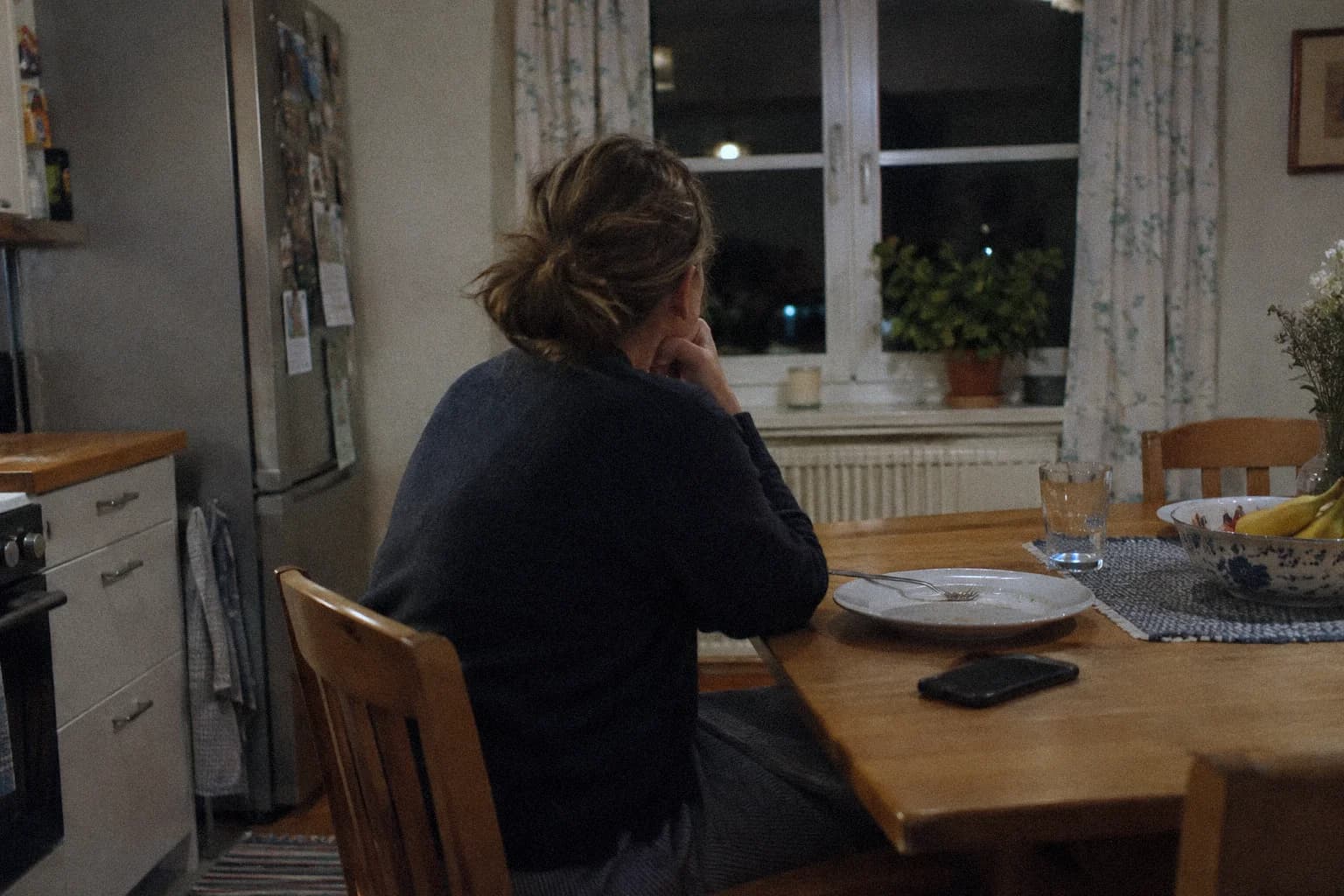
The scenario is nearly always the same. A family dinner in December, a sentence that closes the subject: “it’s forgotten, let’s not talk about it again.” It is sincere. Three months later, someone else says the name out loud and the same heat rises at the back of the neck, carrying an unpleasant question: was I lying?
No. What you said in December was true. It just described the part that was up to you.
Myth: deciding to forgive is enough to move on
This is the idea that does the most damage, and it is contradicted by the simplest measurement imaginable: take people through forgiveness, then look at what moved.
A controlled trial by Everett Worthington’s team assigned 102 female undergraduates either to a six-hour forgiveness intervention or to a waiting list (Lin, Worthington et al., 2014). The programme did shift something, and one thing only: emotional forgiveness improved, decisional forgiveness did not. In other words, what the work moved was not the decision. What took six hours of work was everything else.
The practical consequence: if the decision does not produce relief, repeating it louder will not produce any either. That is why the approaches that work look less like a resolution than like a step-by-step path to forgiving someone who hurt you (in French), spread out over time.
Forgiving and forgetting do not happen at the same time
A 2015 experiment asked the question head-on: does forgiving make you forget? Participants were led either to forgive an offender emotionally, or merely to decide to forgive, or neither; what they retained about the offence was then measured (Lichtenfeld et al., 2015).
Only the first group recalled fewer offence-relevant traits. The mere decision to forgive produced no such effect.
What to take from this is not “forgive emotionally in order to forget”, which would be an absurd instruction, since that is precisely the part nobody commands. It is the order of things: the memory grows lighter afterwards, as a consequence, never as a starting point. As long as forgetting is treated as proof of forgiveness, you are watching an indicator that cannot have moved yet.
People say that lingering pain means forgiveness failed
It is the most common reading, and the most expensive. It adds a reproach to the injury: not only does this hurt, but I should have been over it by now.
Nothing in the research supports that equivalence. Since the two components of forgiveness are measured separately and move at different speeds, residual pain is exactly what you would expect from forgiveness in progress. What would be strange is the opposite: a real offence whose emotional trace vanished on the day of the decision.
There is one case where the question is worth asking, though: forgiveness spoken because it was expected of you. Said to close a tension, to hold a role in a family, to avoid being the one who drags things out. That forgiveness has not failed, it was simply never asked for by you, and that is why it relieves nothing.
What brings the pain down when deciding is no longer enough
The variable you have a grip on is not the offence, and it is not your willingness to forgive either. It is the number of times a day the scene gets replayed.
Every rerun puts the body back where it was, and it is that repeated state that wears you down, far more than the original event. Hence a practice that asks neither for excuses to be made nor received, and no particular feeling to be summoned: interrupt the replay without fighting it.
Three to five minutes, seated, with nothing to reach:
- Let the breath drop into the belly and slow of its own accord, without forcing a count. A diaphragmatic breathing protocol followed over several sessions was associated with lower negative affect in healthy adults (Ma et al., 2017).
- When the scene comes back, and it will, do not push it away: note “here we go again”, then return to the feeling of the exhale lengthening.
- Close without a verdict. No question along the lines of “did I forgive today?”, which restarts the replay the session had just interrupted.
The movement of the breath does the work for you: it rises, it falls, it starts again without you having to carry it. That is all these minutes ask for. The same logic holds outside forgiveness, for any thought that loops: stopping rumination (in French) is never about winning against a thought, only about no longer feeding it.
If you would rather be guided than count alone, that is also what a forgiveness meditation (in French) does, and it is a different matter again when the reproach is aimed at yourself: forgiving yourself follows another path.
When forgiveness is not the right question
This reading does not fit every situation, and that is worth saying plainly.
If the relationship keeps damaging something, working on your forgiveness before setting a boundary is like mending a window while stones are still being thrown. The boundary comes first, the rest waits. In the same way, an offence that involves violence or coercive control is not handled with a breathing exercise: it calls for someone to talk to, not a technique.
And there is one exit people rarely mention, which in some cases is the most honest of all: putting the grudge down without forgiving. Stop feeding the memory, never say the word, grant nothing to anyone. This is not forgiveness on the cheap. It is simply another door, and it leads to the same place: a scene that replays less often.
Frequently asked questions
- Did I really forgive if it still hurts when I think about it?
- Most likely yes. Researchers separate decisional forgiveness, the choice to give up revenge and resentment, from emotional forgiveness, the gradual replacement of anger by more neutral feelings. The first can be settled long before the second is done. Feeling your throat tighten at the memory tells you where you are in the second one, not that the first never happened.
- How long does the pain take to fade after forgiving?
- The available evidence does not support a figure that would hold for everyone, and no study measures the delay for an ordinary everyday offence. What forgiveness interventions do show is that the emotional side moves with deliberate work, not with a resolution alone. A more useful marker than a duration: how often the scene replays itself in your head.
- Do I have to speak to the person again for this to pass?
- No, these are two separate things. Forgiving concerns your relationship to the memory; reconciling concerns the relationship itself, and assumes the person is safe to be around. You can watch your anger subside while keeping a permanent distance, and that is often the only workable outcome when the behaviour has not changed.
- Why does the pain come back all at once, months later?
- Because some detail of the scene has been reactivated: a date, a place, a sentence, a smell. That return does not undo the ground you covered, it reactivates a trace that is still there. The sign that things are moving is not the absence of those returns, it is their intensity, their length, and how quickly you get back to your day.
- What should I do when I blame myself for still hurting after forgiving?
- First notice that this is a second layer on top of the first: to the pain of the offence you are adding the reproach of not being over it. That second layer is what wears people out, and it comes from a false expectation, the idea of a forgiveness that would switch everything off at once. Naming it already removes half the weight.
- When should I see someone rather than keep going alone?
- When the scene has replayed daily for months, when sleep, appetite or work are visibly affected, or when the offence involves violence or coercive control. In those cases forgiveness is not the right first tool, and a psychologist or your family doctor is a better interlocutor than a breathing exercise.
Sources
- Forgive and Forget: Differences between Decisional and Emotional Forgiveness — Lichtenfeld et al., 2015
- Efficacy of REACH Forgiveness Across Cultures — Lin, Worthington et al., 2014
- The Effect of Diaphragmatic Breathing on Attention, Negative Affect and Stress in Healthy Adults — Ma et al., 2017