Meditating with eyes open: what a resting gaze changes
Eyes open or closed: what you are trading
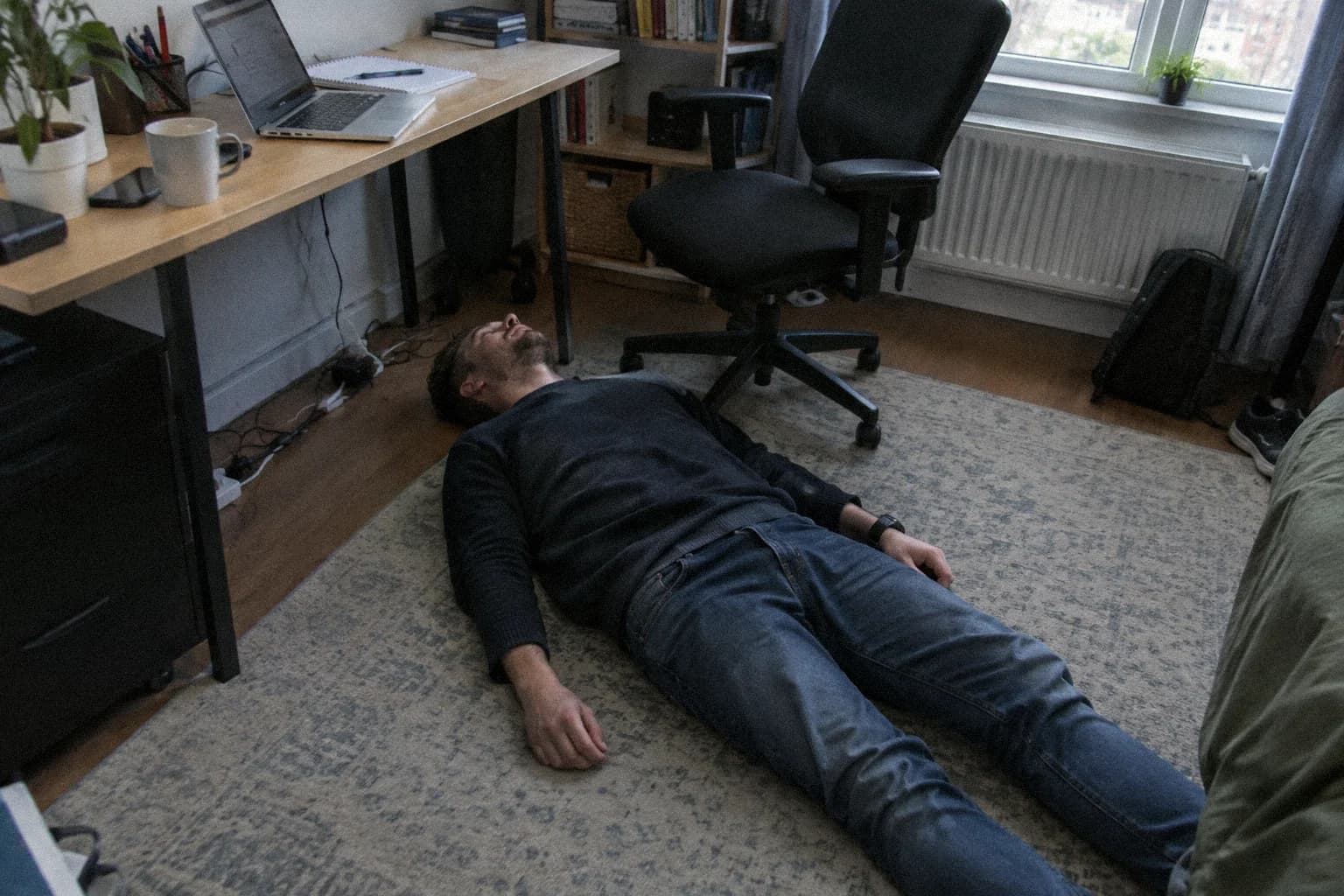
Closing your eyes buys relaxation and costs alertness. Keeping them half-open does the reverse: slightly less calm, far less drowsiness. Neither option is right in the abstract, which is exactly why the question keeps coming back.
The shift has been measurable since the earliest days of electroencephalography. The moment the eyelids close, alpha activity rises at the back of the skull, and it drops again when they reopen. A systematic comparison of the two resting conditions finds that gap well beyond the occipital region. The brain cuts off a major sensory input, and it changes regime.
What this amounts to in practice is less dramatic than the trace. You do not switch into another state. You move a slider between two things meditation asks for at once: staying relaxed, staying present.
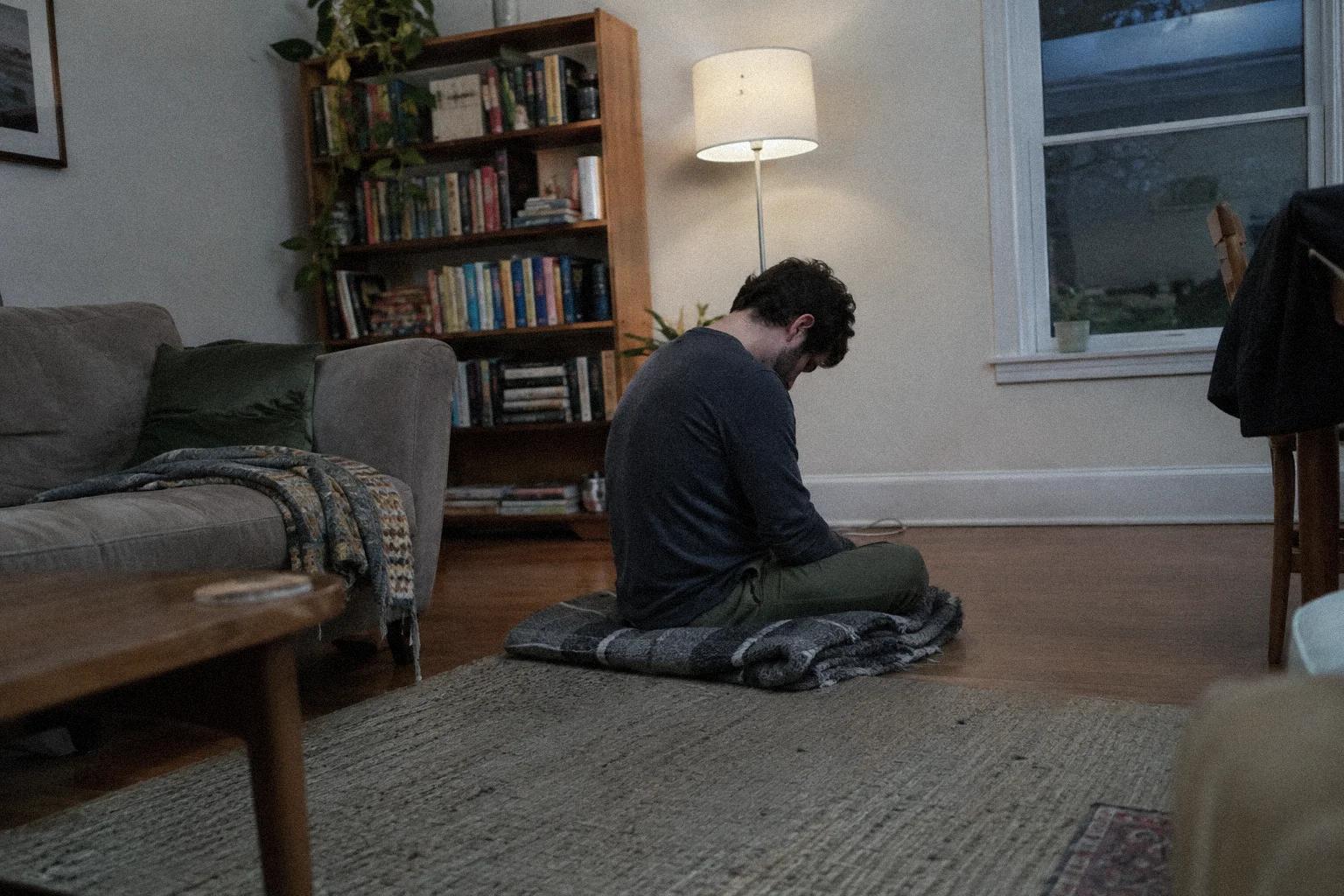
Contrary to what people often assume, the more demanding practice is not the one done with closed eyes. Zazen is practised with the eyes open, the gaze falling about a metre ahead, precisely to avoid the two drifts that closed eyelids encourage: drowsiness, and the inner film.
Step 1: Settle it with one question: 30 seconds
Ask yourself one thing before you start: what got in the way last time?
If it was nodding off, or that sense of drifting into a half-dream without noticing the time pass, open them. If it was restlessness, your surroundings, or trouble feeling anything in the body, close them.
And if nothing got in the way, keep doing what you were doing. The position of the gaze is a setting, not a technique: you change it when something is not working, not on principle.
Drowsiness is by far the most common reason. If that is your case, know that sleep debt and the position of your back often matter more than your eyelids, and that the slot you pick in the day counts just as much. The gaze comes on top of those, not instead of them.
Step 2: Rest your gaze a metre ahead: 2 minutes
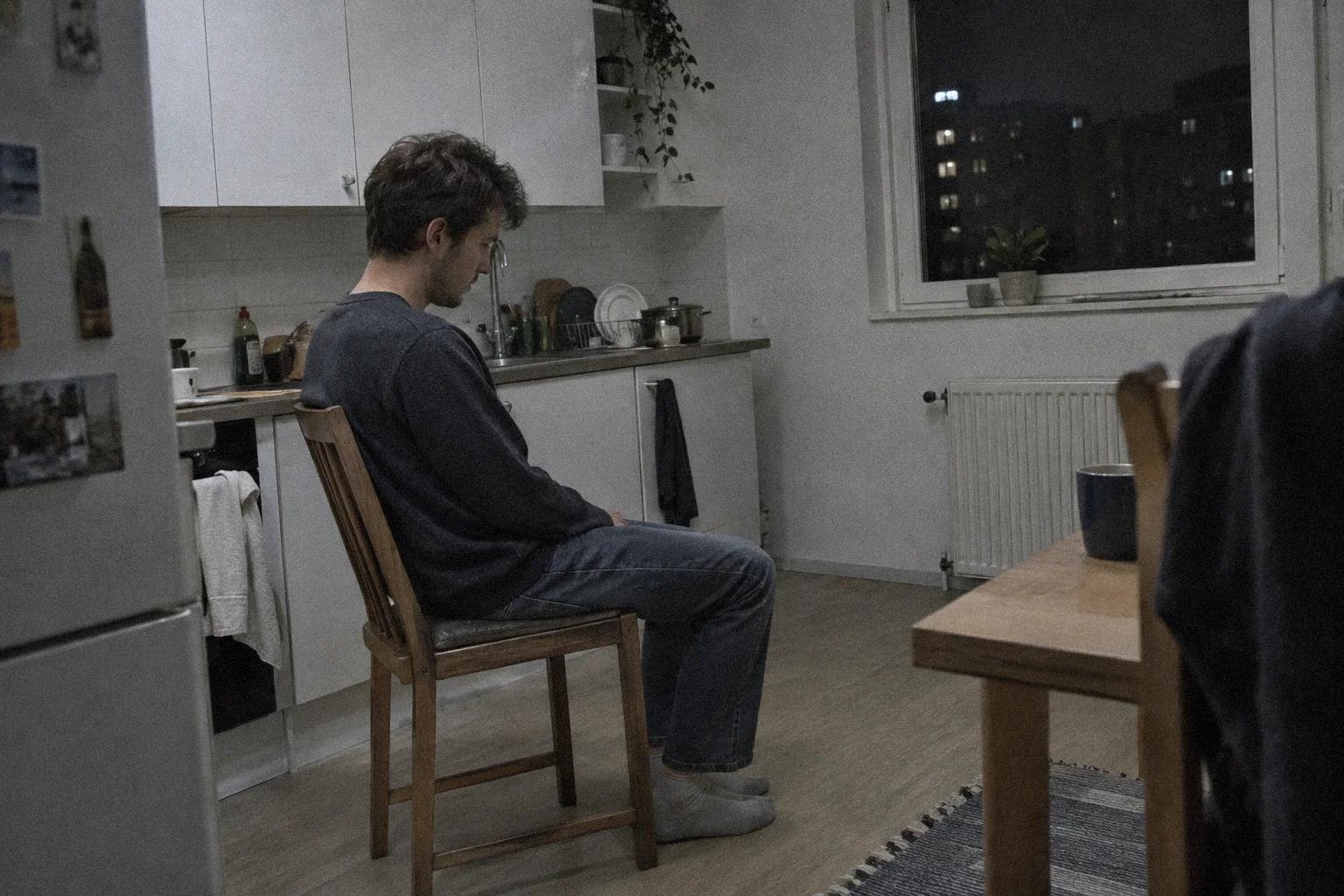
Sitting down, let your head tilt by a few degrees. The gaze then falls on its own to the floor, about a metre away. Not on an object: on an area.
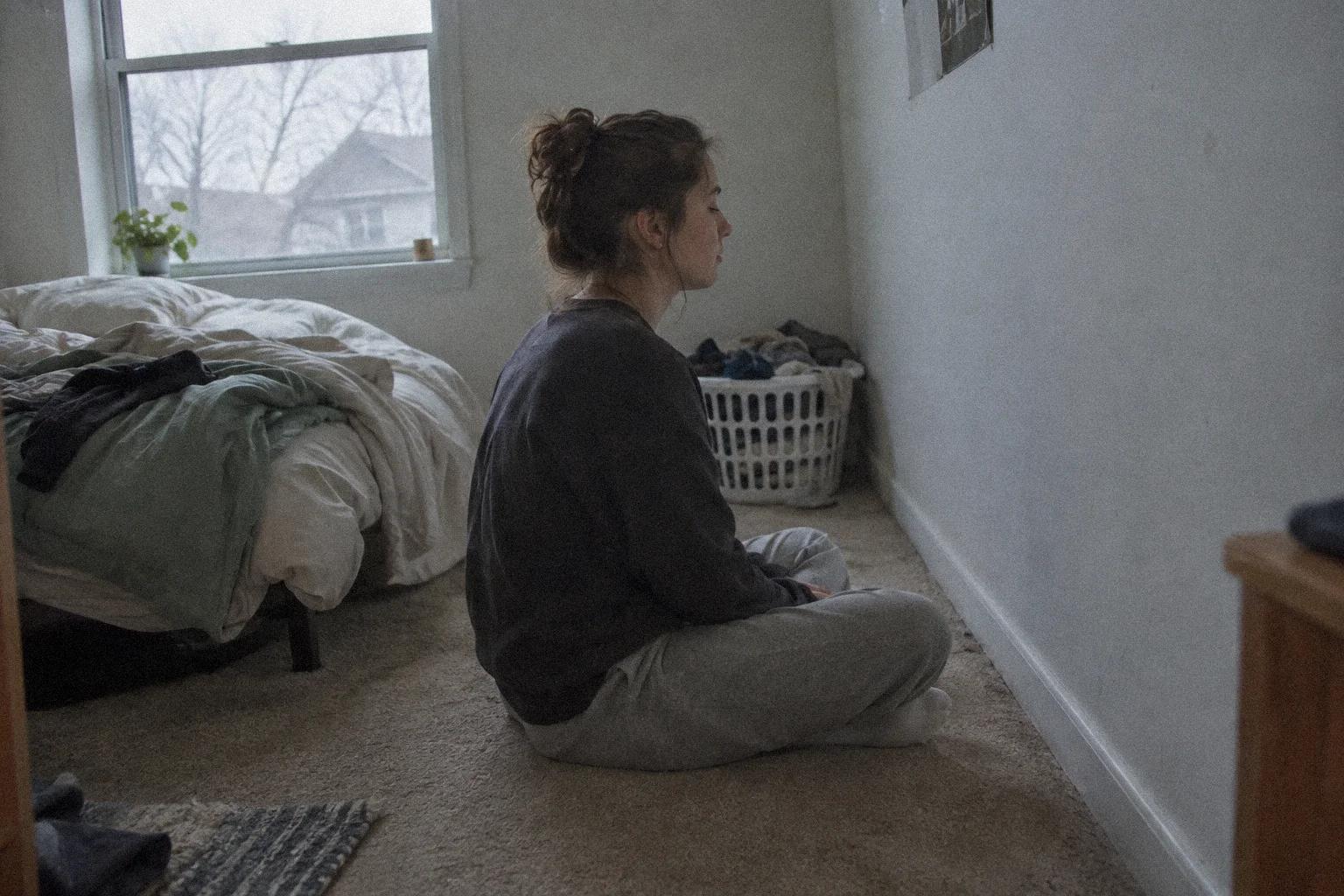
That distinction matters more than it sounds. Fixing on a point takes continuous muscular effort, which ends up bringing back the very tension you were trying to drop. A resting gaze catches on nothing. Outlines go slightly soft after a minute, and that is a good sign rather than a problem.
A bare wall, a plain rug, a wooden floor: anything works as long as nothing moves in the field of view. Avoid a window onto the street, and a screen even in standby.
Step 3: Let the eyelids drop halfway: 2 minutes
The eyes are neither wide open nor closed. They sit halfway, the way they do just before falling asleep, except that the back stays upright.
This position has an advantage neither extreme offers: it cuts down the amount of visual information without closing the channel. You still see the room, so you know where you are, but not sharply enough to take an interest in what is in it.
It feels odd the first few times. The eyelids want to shut completely or open wide, and they go back and forth for two or three minutes. Let them do it without correcting every time: they settle on their own.
Blink normally. Holding back a blink is the surest way to end up with dry eyes and the urge to stop.
Step 4: Come back to the gaze when attention leaves: the rest of the session
This is where open eyes earn their keep.
With the eyelids closed, you often notice very late that you have drifted off: no external cue flags it. With a resting gaze, the return is immediate. The moment you notice the floor has dropped out of your attention, and not merely gone soft, you are gone. The information arrives within a second.
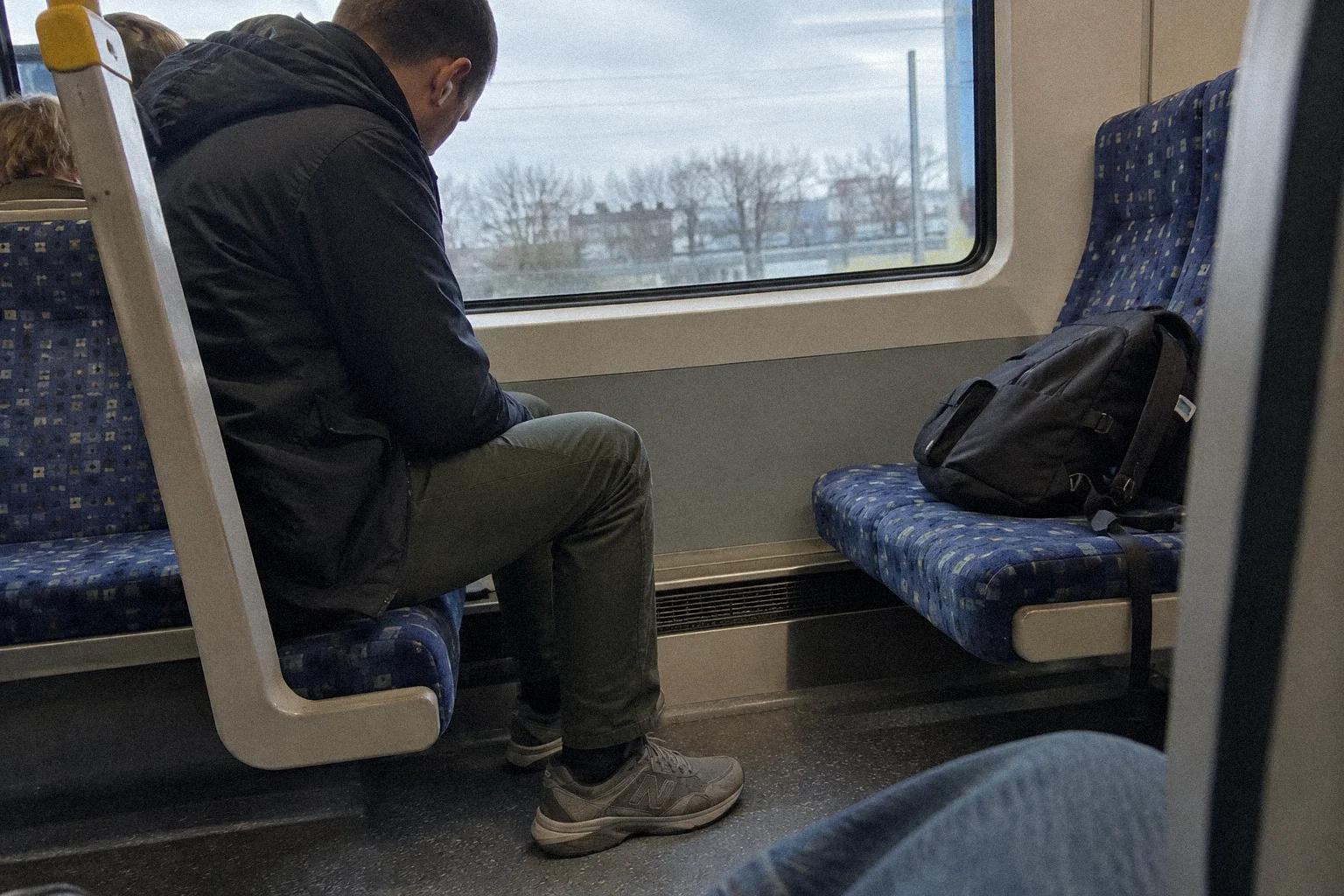
The move is then tiny: come back to the floor ahead of you, find it again in your field of view, carry on. No reproach, no starting over from the beginning. The gaze becomes a quiet anchor, much like the breath, with the advantage of never speeding up when you are stressed.
The typical case is the morning commute. Closing your eyes on a packed train is rarely comfortable, and plenty of people give up and tell themselves they will meditate later. A gaze resting on the floor between the seats, on the other hand, goes unnoticed and lasts the whole journey.
Can you meditate with your eyes open as a beginner?
Yes, and it is often simpler.
The idea that closed eyes are the beginner setting comes from confusing relaxation with meditation. Someone starting out who closes their eyes is left alone with a stream of thoughts they are not used to watching, in the dark, with nothing to come back to. Many stop there, concluding that they cannot do it.
A resting gaze gives them a physical point of return. You know when you have left it, you know how to come back, and the session stops depending on the ability to hold attention on an internal sensation you can barely feel yet.
The trade-off is real: relaxation arrives more slowly with open eyes. When the goal is to release the body rather than train attention, lying down with closed eyes remains the better fit (in French).
When closing your eyes is the problem
There are situations where this stops being a matter of preference.
Closing your eyes removes the visual cue that tells you where you are. For some people that is not relaxing at all: it triggers anxiety, a sense of losing control, or alertness that climbs instead of dropping. This happens more often than people assume, and it is not a flaw in your practice. In that case, open eyes are not a variation: they are what makes the session possible at all.
That said, this approach does not suit everyone. If keeping your eyes open leaves you caught by whatever is around you, if you spend the session following details on the floor, close them again and work on the environment instead: a room you cannot make quiet is handled differently.
And if the discomfort tied to closed eyes is strong, repeated, or shows up outside meditation, it deserves a conversation with a professional rather than a posture adjustment. The remaining settings, for their part, fit into six adjustments aiming for the least possible effort (in French).
Frequently asked questions
- Can you meditate with your eyes open?
- Yes. Zazen has been practised that way for centuries, with the eyelids half lowered and the gaze falling to the floor about a metre ahead. Nothing suggests a session with open eyes is worth less than one with closed eyes: these are two alertness settings, not two levels of practice.
- Where should you look when meditating with your eyes open?
- At an area of floor about a metre in front of you, never at a specific object. Fixing on a point takes continuous muscular effort that becomes tiring. A bare wall, a plain rug or a wooden floor all work, as long as nothing moves in your field of view.
- Why do I fall asleep when I meditate with my eyes closed?
- Closing your eyelids removes the main cue that sustains alertness, and drowsiness follows easily if you are carrying sleep debt or sitting down after a meal. Opening your eyes halfway helps, but the time of day and an unsupported back often make a bigger difference.
- Do half-open eyes strain your vision?
- Not if you blink normally and avoid staring. Eye strain comes from two habits: holding back blinks, and letting the gaze catch on a detail. The first few minutes feel awkward because the eyelids are looking for their position, then they settle.
- Should you keep the same setting every session?
- No. The position of the gaze is a setting, not a technique: you change it when something is not working. Plenty of people open their eyes in the morning and close them in the evening, simply because the need for alertness is not the same.
Sources
- EEG differences between eyes-closed and eyes-open resting conditions — Barry et al., 2007