How to Meditate in Nature: a 5-Step Guide
How do you meditate in nature?
Meditating in nature comes down to changing the support: instead of the breath, you take what the place already sends you, the contact points of the body, the sounds, the temperature of the air on your hands. Everything else about the practice is identical. That one shift explains why the same person lasts ten minutes on a bench where they gave up after four in their living room.
Outdoors there is nothing to manufacture: the environment keeps producing sensory events, whereas a silent room leaves you alone with your own head. It is also why instructions like « empty your mind » become pointless here: there is already plenty for attention to hold.
In exchange, two difficulties show up. The place draws the eye and turns into a show, and the smallest surprise, a passer-by, a lawnmower, feels like an interruption. The five steps below deal with both. Allow about twelve minutes in total, and feel free to keep only two of them.
Where can you meditate outside if you live in a city?
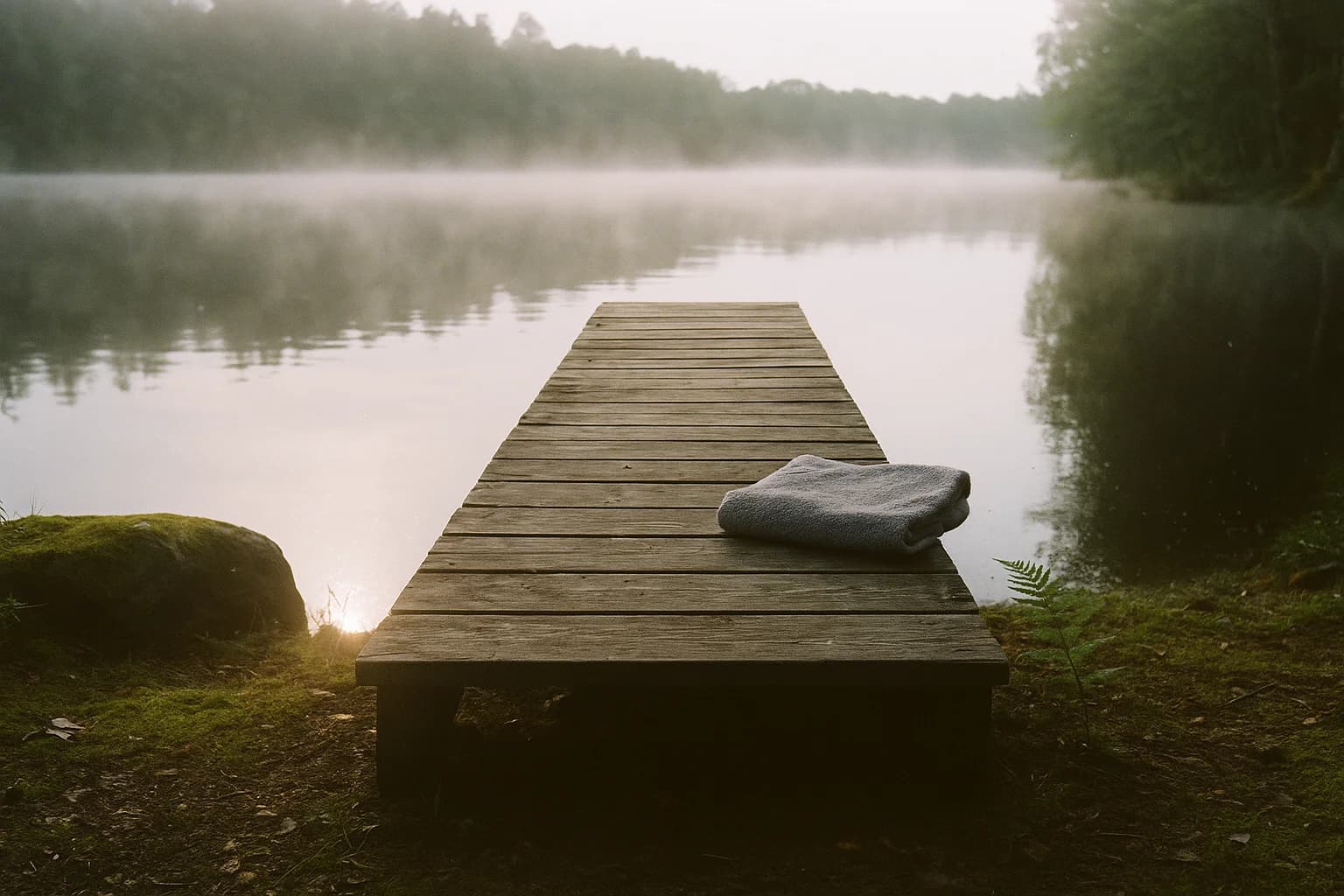
A bench in a small square will do, and it is often the better choice. What counts is not how beautiful the place is but whether you can go back without organising an outing: somewhere five minutes from home, where you never have to decide again.
Four practical criteria, in this order. You can stay still there without blocking anyone. Nobody will strike up a conversation. There is at least one living thing in your field of view, a tree, grass between paving stones, the sky. And you can go without checking the forecast the night before.
A balcony counts. A courtyard counts. So does a city park: research on what forest bathing actually does (in French) suggests a large part of the effect does not depend on the size of the forest.
Step 1: Choose the spot in thirty seconds (1 minute)
Do not look for the right place. Take the first one that meets the four criteria, sit down, and treat the question as settled for the next six weeks.
The best bench does not exist. Looking for a better one is the most common way of never starting, and time spent comparing three lawns is time when attention works exactly as it does at the office: it rates, it ranks, it optimises.
Step 2: Find the contact before the view (2 minutes)
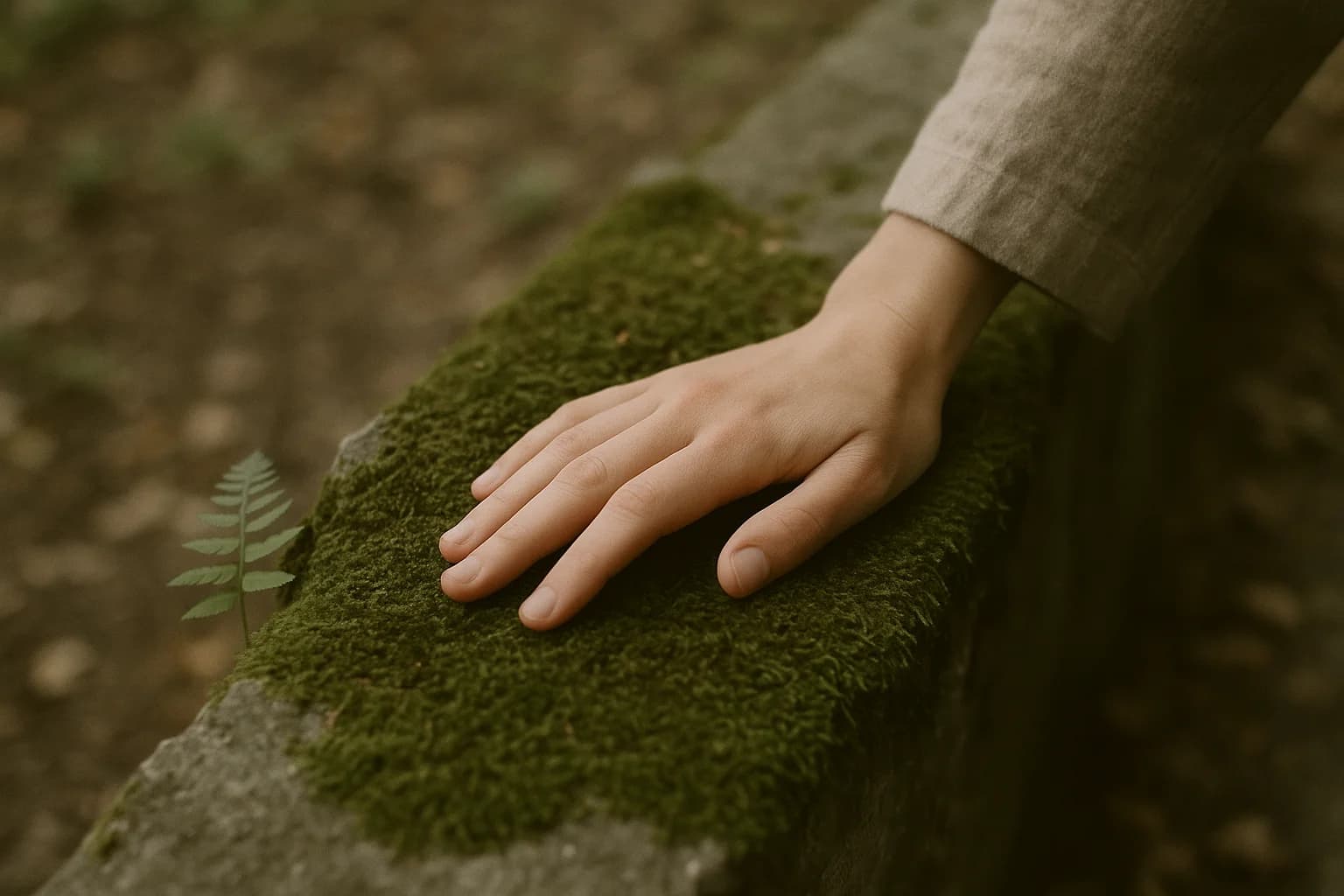
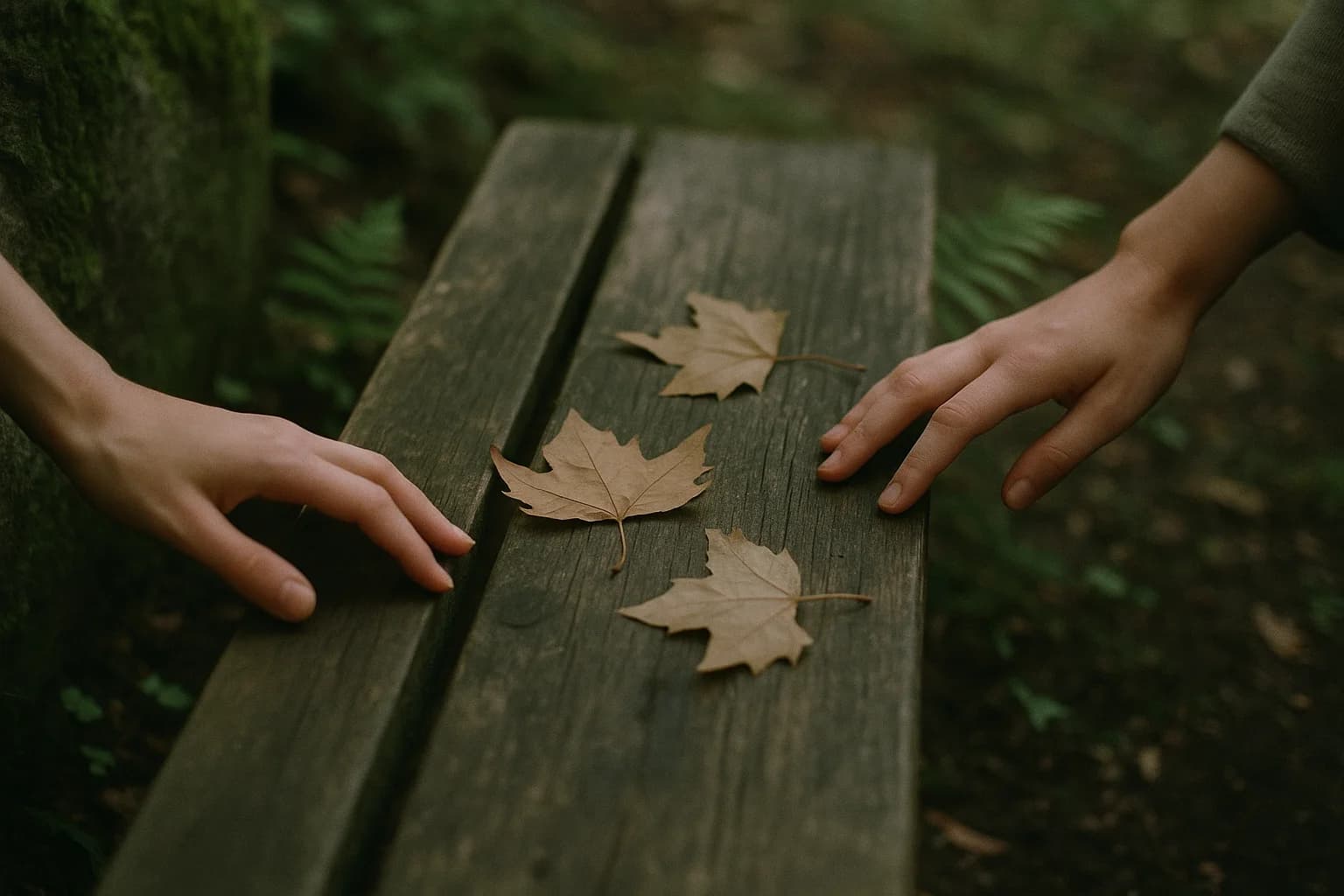
Before looking at anything, find where the body is being held. Sit bones on the wood of the bench, soles inside your shoes, maybe one hand flat on the stone or the moss beside you. Feel whether the surface is cold or mild.
That contact is what you will return to for the whole session, not the view. A landscape gets looked at once and then forgotten; a sensation of contact stays checkable at any moment, which is precisely what you want from a support for attention.
That way in through the body has its own logic, set out in our piece on connecting with nature through the sensation of weight (in French): gravity is the one link with the place that never stops.
Step 3: Let sounds arrive instead of sorting them (2 minutes)
Now widen out to listening. The instruction is one word: receive. You do not have to hunt for birds, push traffic away, or decide which sound belongs to nature and which one spoils it.
This is where most people tense up, because they are waiting for a silence that will not come. A mower starts, a scooter goes past, a child shouts. Noise only breaks a session if you cast it as an intruder; otherwise it becomes one more sound event, no different from wind in the leaves. We devoted a whole article to meditating when it is noisy.
Step 4: Walk twenty steps, then stop (5 minutes)
Stand up and walk slowly, about twenty steps, feeling the foot roll. Stop. Stay still for three breaths. Set off again. Repeat four or five times.
The stop is the useful part, not the walk. It is when the body goes still that the gap between inner restlessness and the calm of the place becomes noticeable, and that contrast teaches more than any instruction.
A Stanford experiment compared ninety minutes of walking in a natural setting with the same duration alongside a busy road: the first group reported less rumination, along with lower activity in the subgenual prefrontal cortex (Bratman et al., 2015). Ninety minutes is not five, obviously, but the direction is there. We looked more closely at what research shows about walking meditation (in French).
Step 5: Write two sentences to yourself for next week (3 minutes)
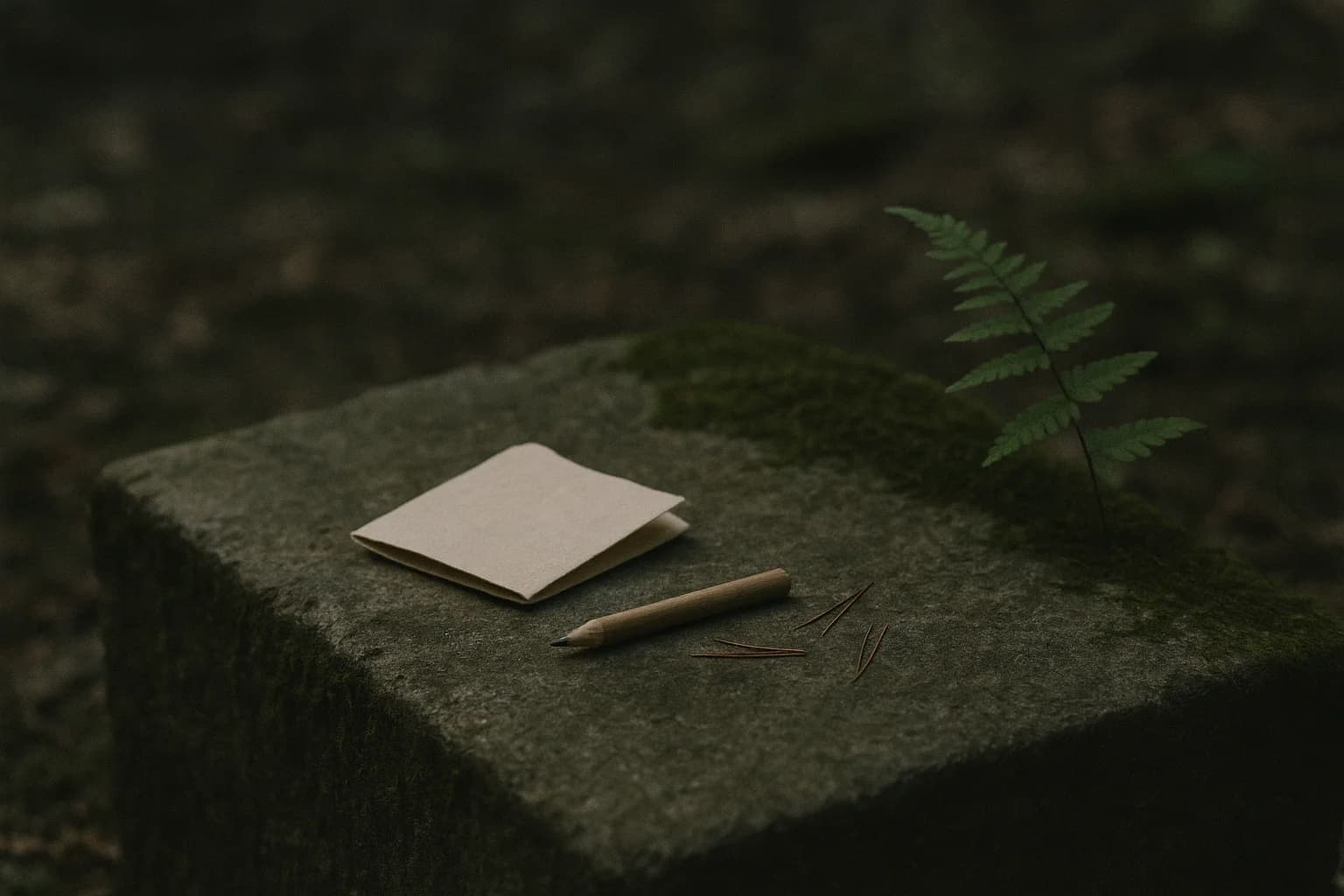
Sit back down. Address two sentences, in your head, to the person you will be in seven days, here, on this bench. Not wishes, not a plan: facts and a bit of support. « The week is going to be tight, you already know that. The lime tree will still be here on Tuesday. »
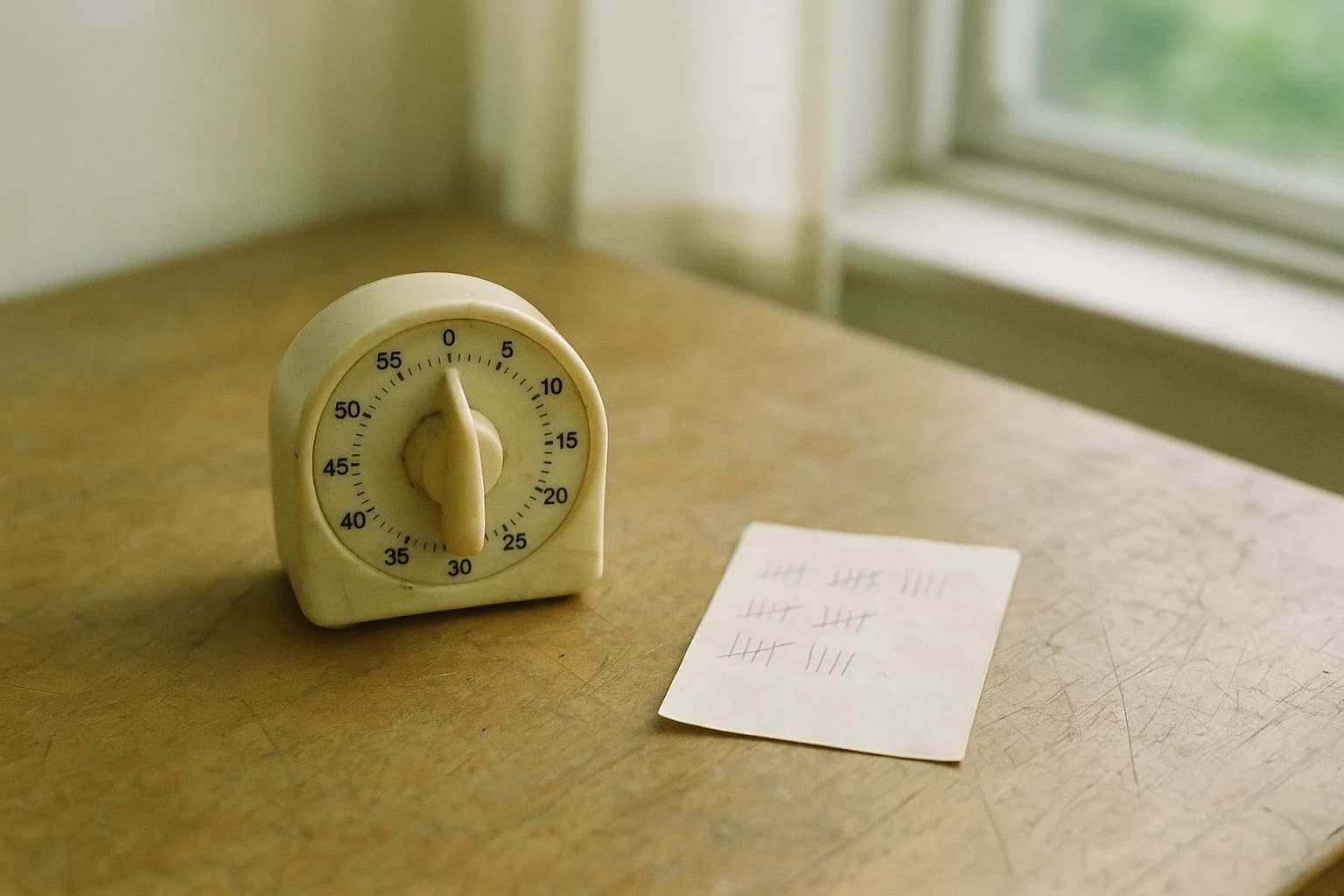
You can write it on a scrap of paper or keep it in your head. Two sentences, never more.
This exercise belongs to a family studied under the name best possible self, where you picture a future version of yourself. A meta-analysis covering around thirty trials credits it with a modest but consistent effect on positive affect, with more fragile results on optimism (Carrillo et al., 2019). Modest and consistent: that is exactly what you want from a weekly practice.
A reader told us she had kept this appointment for five weeks in the same park in Lyon, and had taken three weeks to stop writing herself instructions. Her account is told in full in the park letters she never sends (in French). The turning point, for her as for many, was moving from promises to observations.
How long do you need to meditate outside for it to matter?
Count on five to twelve minutes a session, and aim for the weekly total rather than the performance of the day.
A survey of nearly twenty thousand adults in England found a clear threshold: from about a hundred and twenty minutes a week spent in contact with natural spaces, people are markedly more likely to report good health and wellbeing, with the association levelling off beyond three hundred minutes (White et al., 2019). The detail that matters here: it made no difference whether those two hours came in one visit or were spread across the week.
Ten minutes a day in a small square therefore puts you inside the useful range. That is exposure to nature rather than meditation as such, but the two stack up in the same slot.
When meditating in nature is not the right idea
If the place makes you uneasy, the practice will not take. Part of your attention will stay busy scanning the surroundings, and no instruction gets ahead of that reflex. Look for somewhere more sheltered, or practise at a window.
Two other cases call for adjustments. Seasonal allergies make April miserable and there is no reason to insist: postpone to the autumn. And if you are going through a period where sitting still brings up difficult thoughts, the walking version of step 4 is preferable to sitting until it passes.
Then there is the most ordinary case: you do not feel like going out. A guided session indoors, actually done, beats a forest session that stays imagined. The bench will still be there on Thursday.
Frequently asked questions
- Should you close your eyes to meditate in nature?
- Usually not, and outdoors it is often a bad idea. Closed eyes in a public place put many people on alert: part of their attention stays busy watching what might approach. Keep your eyes half open, gaze resting on the ground two or three metres ahead, without fixing on anything. If you feel completely safe, in a private garden for instance, closing your eyes for a few minutes is fine.
- Can you meditate outside in winter or in the rain?
- Yes, as long as you make it shorter. In cold weather the body contracts and attention narrows to the cold within a few minutes: aim for three to five minutes rather than ten, and move rather than sit. Under shelter, rain is an excellent sound support, because it gives a continuous and irregular flow that takes no effort to follow.
- What is the difference between meditating in nature and forest bathing?
- Forest bathing, or shinrin-yoku, describes a slow sensory immersion, usually in woodland and over roughly forty minutes, with no particular attention instruction. Meditating in nature is shorter, more structured, and works in any green space, including a balcony. The two overlap on the essentials: slowing down and using your senses rather than your thoughts.
- What if you feel watched in a public park?
- Choose a posture that signals nothing. Sitting normally on a bench, hands on your thighs, eyes open, you look like someone getting some air, and nobody notices anything. It is the visible meditation posture, legs crossed on the ground and hands arranged, that draws looks. If the discomfort persists, the slow walking step works just as well and goes completely unnoticed.
- Does meditating on a balcony count?
- Yes, provided something living or changing is in view: a plant, a street tree, the sky, shifting light. Most of what acts on you outdoors comes from the air, from sounds you do not control and from variations in light, and a balcony supplies all three. Studies of nature exposure count urban green space too, not only forests.
Sources
- Spending at least 120 minutes a week in nature is associated with good health and wellbeing — White et al., 2019
- Nature experience reduces rumination and subgenual prefrontal cortex activation — Bratman et al., 2015
- Effects of the Best Possible Self intervention: A systematic review and meta-analysis — Carrillo et al., 2019